Yesterday, I found my first Bedfordshire MR since 17 September 2008; the last one was during a crazy ten day period when I found four locally. Was that really six-and-a-half years ago?
Blog photo of the year so far for me is Matt's, which lends itself perfectly to a caption competition - Upper Caldecote 'Red' holding Rhode Island Red. Apologies for combining politics with domestic fowl...I guess you could call it 'poulitics.'
This year looks like being a straight fight between AGr and RIB. They really are the Lewis Hamilton and Nico Rosberg of the 2015 self-finding circuit. I am more of a 2015 incarnation of Daniel Ricciardo - very quick over one lap, but ultimately disappointing over the race distance.
AGr has some serious blockers on his list, and RIB is bound to find three or four scarce species at Meadow Lane. But my money is on MB finding a rare wader at Broom - Black-winged Stilt? Also, MJP to find a Sabine's Gull at Stewartby.
Digressing, Sabine should be pronounced Say-BIN, not Say-BINE, as it was named for Sir Edward Sabine, not the Sabine Hills near Rome nor the (in)famous painting by Rubens. I for one had been pronouncing it incorrectly for years.
Atb,
DOM
Showing posts with label Potton. Show all posts
Showing posts with label Potton. Show all posts
Wednesday, 25 March 2015

Wednesday, 3 September 2014
Even blind squirrels eventually find a nut...
| ... especially if they are searching for between 7-10 hours per day. Deepdale Quarry, Potton, 03-Sept |
|
| Curlew | 1 |
| Black-headed Gull | 2 |
| Lesser Black-backed Gull | 1 |
| Stock Dove | 2 |
| Woodpigeon | 88 |
| Collared Dove | 3 |
| Green Woodpecker | 6 |
| Great Spotted Woodpecker | 3 |
| Magpie | 9 |
| Jackdaw | 29 |
| Rook | 19 |
| Carrion Crow | 11 |
| Goldcrest | 7 |
| Blue Tit | 52 |
| Great Tit | 43 |
| Coal Tit | 10 |
| Swallow | 9 |
| Long-tailed Tit | 17 |
| Chiffchaff | 3 |
| Blackcap | 11 |
| Whitethroat | 10 |
| Treecreeper | 1 |
| Wren | 10 |
| Starling | 2 |
| Blackbird | 22 |
| Song Thrush | 5 |
| Spotted Flycatcher | 1 |
| Robin | 32 |
| Whinchat | 1 |
| Dunnock | 18 |
| Chaffinch | 35 |
| Bullfinch | 3 |
| Greenfinch | 12 |
| Linnet | 4 |
| Goldfinch | 91 |
Monday, 1 September 2014
Ring-necked Parakeet: Potton recent history
Is it tickable? Taking the below into account - I'm afraid that yes, it is, much to my disappointment. ;-)
From: George, William
Sent: 06 June 2014 16:04
To: _Bird News;
From: George, William
Sent: 06 June 2014 16:04
To: _Bird News;
Friday 30th May
· Ring-necked parakeet – flew northwards over Everton road, Potton, squawking loudly at c.8:30pm (Benedict Gove)
| rbashford@ [bedsbirds] bedsbirds@ | |||
| reply-to: | rbashford | ||
| to: | bedsbirds | ||
| date: | 1 September 2014 07:38 | ||
| subject: | [BedsBirds] Ring-necked Parakeet, Sandy Heath Quarry |
Flew towards Oak Farm Deepdale per Darren O-M
Punkbirder s/f rules:
Time Category 1: highly transient species. These are species which are almost always on the move. When individuals are seen, they usually disappear fast. Once disappeared, you don’t really expect them to re-appear in the same place. We therefore reckon you can count these species TWO DAYS after a sighting at the same place.
Time Category 2: Medium transient species. These can be counted FOUR DAYS after a previous sighting at a given site.
Time Category 3: Everything else. Most species can occasionally disappear for long periods, and then re-appear at the same site. Your birding behaviour will change if you’re at a site where you know a rarity was present recently. You’ll be specifically looking out for it. It wouldn’t be a pure find. We therefore think that SIX DAYS is a sensible time period before you can count one of these species.
IMPORTANT NOTE: In some cases, long-staying rarities may not be reported very regularly, for example wintering ducks on remote Scottish lakes. Discretion may be required in these cases, but generally speaking we think a gap of at least a month is required before a sighting of such a long-stayer could count as a self-find. For rarities that return to a known site each year, the first person to find the bird in a given season can count it as a find.
If you find yourself in situation 2, you need to check the Distance Re-finds categories to see if you’ve got a self found tick.
Distance Category 1: Large and mobile species. You’d probably start scanning the sky as soon as you hear one of these species has been seen nearby. Consequently your birding behaviour has changed, thanks to the news. There is an extra complication here: many of these species follow the coastline when migrating, making it possible to track their movements along the coast. On a given day, it may be possible to "pre-emptively twitch" a bird by guessing a point on the coast that it will pass.We therefore have two thresholds for claiming these species as self found: for birds which are being tracked along the coast (i.e. seen previously at another site or sites on the day of your sighting), you must be at least 50km from the most recent report. For birds that are not being tracked along the coast, you’ve only got to be 25km or more away.
Distance Category 2: Intermediate species. Again, these species may follow the coast when migrating, though they are less predictable. The threshold for counting birds that are being tracked along the coast on the day of your sighting is 25km, and 10km for other records.
Distance Category 3: Small, cryptic and less mobile birds. For the species listed here, we reckon 5km is enough to constitute a find, and they are almost impossible to track along the coast so that situation is irrelevant.
Saturday, 14 June 2014
Bee-eater
Bee-eater. Potton. Friday 13th. Ambivalence.
During the past fortnight or so, I have spent an awful lot of time sky-watching, horizon-scanning and ear-cupping, but I was not quite expecting this.
My lightweight description is now in the hands of the Rarities Committee, although it is firmly implanted in my personal records. My notebook entry reads ''BE!! heard once, ''prrr-rrrii!'' rolling, disyllabic, not seen.'' I have since found out that the BTO code for European Bee-eater is MZ, not BE, obviously. MeropZ. Silly me.
30+ hours per week in the field was sure to eventually bring a reward, but I wish I had seen it...and it been twitchable. How many are though?
Strangely, I was thinking about Bee-eaters a month or so ago, and thought the most likely SF'er to get one would be John at Grovebury. I have only been there three or four times, but it always strikes me as looking quite rare and quite possibly to a Bee-eater's liking.
DOM
During the past fortnight or so, I have spent an awful lot of time sky-watching, horizon-scanning and ear-cupping, but I was not quite expecting this.
My lightweight description is now in the hands of the Rarities Committee, although it is firmly implanted in my personal records. My notebook entry reads ''BE!! heard once, ''prrr-rrrii!'' rolling, disyllabic, not seen.'' I have since found out that the BTO code for European Bee-eater is MZ, not BE, obviously. MeropZ. Silly me.
30+ hours per week in the field was sure to eventually bring a reward, but I wish I had seen it...and it been twitchable. How many are though?
Strangely, I was thinking about Bee-eaters a month or so ago, and thought the most likely SF'er to get one would be John at Grovebury. I have only been there three or four times, but it always strikes me as looking quite rare and quite possibly to a Bee-eater's liking.
DOM
Saturday, 21 September 2013
MU
I have had a remarkable run of birds at Myers Farm and its six-a-side-sized reservoir this year: Black Redstart, Tree Pipit, Black-tailed Godwit, Greenshank, Pintail, Yellow-legged Gull. I guess that with no other wetland nearby, anything that needs to rest/ feed/ wash doesn't have a lot of choice about where to drop in.
Visiting the site two or even three times a day also ensures that I don't miss very much. My visit at dawn this morning was rubbish - as it has been for the past three weeks or so - and it didn't appear much better when I arrived again mid-afternoon...apart from a sparkling, silvery-white beacon of a larid amongst a loafing group of Black-headed Gulls. It was as shiny as an Italian pimp's sun tan. All-white primaries - check; heavy, blood-red bill - check; dark mask - check.
A beauty, and the first I have self-found in the county since one at Willington in 2004. I invited Steve to come along and savour its beauty, but he politely declined. The site is also a bit of a bugger to get to if you're driving.
134 self-found, zero-carbon - the only list that matters to me.
DOM
Visiting the site two or even three times a day also ensures that I don't miss very much. My visit at dawn this morning was rubbish - as it has been for the past three weeks or so - and it didn't appear much better when I arrived again mid-afternoon...apart from a sparkling, silvery-white beacon of a larid amongst a loafing group of Black-headed Gulls. It was as shiny as an Italian pimp's sun tan. All-white primaries - check; heavy, blood-red bill - check; dark mask - check.
A beauty, and the first I have self-found in the county since one at Willington in 2004. I invited Steve to come along and savour its beauty, but he politely declined. The site is also a bit of a bugger to get to if you're driving.
134 self-found, zero-carbon - the only list that matters to me.
DOM
Sunday, 25 August 2013
The Myers Farm 'Complex' Site List
| 1. Mute Swan |
| 2. Greylag Goose |
| 3. Canada Goose |
| 4. Mandarin Duck |
| 5. Teal |
| 6. Mallard |
| 7. Pintail |
| 8. Shoveler |
| 9. Tufted Duck |
| 10. Red-legged Partridge |
| 11. Grey Partridge |
| 12. Pheasant |
| 13. Cormorant |
| 14. Grey Heron |
| 15. Red Kite |
| 16. Sparrowhawk |
| 17. Buzzard |
| 18. Kestrel |
| 19. Hobby |
| 20. Peregrine |
| 21. Moorhen |
| 22. Oystercatcher |
| 23. Ringed Plover 24. Little Ringed Plover |
| 25. Golden Plover |
| 26. Grey Plover |
| 27. Lapwing |
| 28. Snipe |
| 29. Woodcock |
| 30. Black-tailed Godwit |
| 31. Common Sandpiper |
| 32. Green Sandpiper |
| 33. Greenshank |
| 34. Black-headed Gull |
| 35. Common Gull |
| 36. Lesser Black-backed Gull |
| 37. Herring Gull |
| 38. Yellow-legged Gull |
| 39. Common Tern |
| Rock Dove |
| 40. (Feral Pigeon) |
| 41. Stock Dove |
| 42. Woodpigeon |
| 43. Collared Dove |
| 44. Cuckoo |
| 45. Swift |
| 46. Kingfisher |
| 47. Green Woodpecker |
| 48. Great Spotted Woodpecker |
| 49. Magpie |
| 50. Jay |
| 51. Jackdaw |
| 52. Rook |
| 53. Carrion Crow |
| 54. Raven |
| 55. Goldcrest |
| 56. Blue Tit |
| 57. Great Tit |
| 58. Coal Tit |
| 59. Skylark |
| 60. Sand Martin |
| 61. Swallow |
| 62. House Martin |
| 63. Long-tailed Tit |
| 64. Chiffchaff |
| 65. Willow Warbler |
| 66. Blackcap |
| 67. Garden Warbler |
| 68. Lesser Whitethroat |
| 69. Whitethroat |
| 70. Grasshopper Warbler |
| 71. Treecreeper |
| 72. Wren |
| 73. Starling |
| 74. Ring Ouzel |
| 75. Blackbird |
| 76. Fieldfare |
| 77. Song Thrush |
| 78. Redwing |
| 79. Mistle Thrush |
| 80. Spotted Flycatcher |
| 81. Robin |
| 82. Black Redstart |
| 83. Wheatear |
| 84. Dunnock |
| 85. House Sparrow |
| Yellow Wagtail |
| 86. (Yellow Wagtail (flavissima)) |
| 87. Grey Wagtail |
| Pied/White Wagtail |
| (White Wagtail (alba)) |
| 88. (Pied Wagtail (yarrellii)) |
| 89. Tree Pipit |
| 90. Meadow Pipit |
| 91. Chaffinch |
| 92. Brambling |
| 93. Greenfinch |
| [Domestic Canary] |
| 94. Goldfinch |
| 95. Siskin |
| 96. Linnet |
| 97. Lesser Redpoll |
| 98. Common Crossbill |
| 99. Bullfinch |
| 100. Yellowhammer |
| 101. Reed Bunting |
| 102. Corn Bunting |
Black-tailed Godwit
My intention yesterday evening was to go to Tetworth this morning to carry out my WeBS count. I'm rather pleased with my decision at dawn this morning to text my friendly gamekeeper and postpone until tomorrow, on account of the poor weather.
Instead, I stayed closer to home and again visited my closest 'wetland' at Myers Farm. I was kind of expecting something to be there, and my mind was full of Wood Sandpipers and Spotted Redshanks as I made my way there. Predictably, neither was, but a familiar call and a leggy wader on the mud had me adding yet another wader to this surprisingly productive site's list - a juvenile islandica-type Black-tailed Godwit.
In a way, it's a shame the site is so out of the way, but on the other hand, I'm pleased to have it all to myself.
However, I really do think that I should buy myself a smartphone with a reasonably proficient camera.
DOM
Instead, I stayed closer to home and again visited my closest 'wetland' at Myers Farm. I was kind of expecting something to be there, and my mind was full of Wood Sandpipers and Spotted Redshanks as I made my way there. Predictably, neither was, but a familiar call and a leggy wader on the mud had me adding yet another wader to this surprisingly productive site's list - a juvenile islandica-type Black-tailed Godwit.
In a way, it's a shame the site is so out of the way, but on the other hand, I'm pleased to have it all to myself.
However, I really do think that I should buy myself a smartphone with a reasonably proficient camera.
DOM
Friday, 23 August 2013
Pintail at Myers Farm Reservoir, Potton
''Rubbish little farm reservoir on county border pulls in another good bird shocker.''
It isn't really rubbish, it kind of resembles a mini-GLE, but about the size of a six-a-side football pitch and with lots of exposed mud.
Following a Shoveler here (another site first) on 19 August, this morning at dawn a female Pintail was present - by far my earliest date in the county. I think a lot of stuff gets pushed off the fishing lakes just over the border at Little Heath, Gamlingay. Hence, some mornings, there can be reasonably high numbers of wildfowl and on others, nothing at all.
Tuesday's Greenshank was still present and there are now two Green Sandpipers. Not bad really...
ATB,
DOM
It isn't really rubbish, it kind of resembles a mini-GLE, but about the size of a six-a-side football pitch and with lots of exposed mud.
Following a Shoveler here (another site first) on 19 August, this morning at dawn a female Pintail was present - by far my earliest date in the county. I think a lot of stuff gets pushed off the fishing lakes just over the border at Little Heath, Gamlingay. Hence, some mornings, there can be reasonably high numbers of wildfowl and on others, nothing at all.
Tuesday's Greenshank was still present and there are now two Green Sandpipers. Not bad really...
ATB,
DOM
Wednesday, 21 August 2013
GK 3
Yesterday (20th) at Myers Farm Reservoir, north of Potton, I finally self-found-carbon-free-year-ticked Greenshank, then today at Tetworth Hall Wetlands, another two were present.
That takes me to 137 - already surpassing last year's total and nudging me (temporarily, I suspect), into third place.
DOM
That takes me to 137 - already surpassing last year's total and nudging me (temporarily, I suspect), into third place.
DOM
Thursday, 25 July 2013
GH
Thought I had blown this one too. Today, I flushed one out of a ditch at Myers Farm near Potton. I must have visited this site 20+ times at dawn and dusk looking for them, so can only assume that this one was on migration. Saw it well in flight, then it started to scold me from the dense herbage.
So following CS and YG at Tetworth on Saturday and GH today, I am now on 128 self-found, zero-carbon (136 total) - the only list that really matters to me. Game on Messrs Bashford and Grimsey (although I suspect Mr Lynch will be right in the mix when he updates his total).
Tetworth is sure to score me some ticks this autumn...
ATB,
DOM
So following CS and YG at Tetworth on Saturday and GH today, I am now on 128 self-found, zero-carbon (136 total) - the only list that really matters to me. Game on Messrs Bashford and Grimsey (although I suspect Mr Lynch will be right in the mix when he updates his total).
Tetworth is sure to score me some ticks this autumn...
ATB,
DOM
Thursday, 6 June 2013
Non-singing Quail
Went up to 'Potton Heights' (Hatley Road) this morning with no specific targets in mind, although when I arrived, I said to myself ''I'll have to come back this evening and listen for Quail.'' This is a site that I was getting fed up with visiting at dusk in the vague hope of Grasshopper Warbler and/ or Nightingale last month.
Bugger me if twenty minutes later, I didn't flush a Quail from a grassy farm track - the first I have actually seen in the County. I must have been no further than five yards from it before it flew into the crop. I wouldn't exactly say I am a loud person, but neither do I possess the stealth of a ninja. What struck me about the bird's behaviour upon being flushed was how Jack Snipe-like it was - completely silent and a low flight over only a short distance and into cover.
ATB,
DOM
Bugger me if twenty minutes later, I didn't flush a Quail from a grassy farm track - the first I have actually seen in the County. I must have been no further than five yards from it before it flew into the crop. I wouldn't exactly say I am a loud person, but neither do I possess the stealth of a ninja. What struck me about the bird's behaviour upon being flushed was how Jack Snipe-like it was - completely silent and a low flight over only a short distance and into cover.
ATB,
DOM
Monday, 15 April 2013
Tree Pipit deja vu
On 21 August 2012, I found a migrant Tree Pipit in Myers Road Quarry, Potton. I'll be damned if I wasn't there this morning, and at almost exactly the same spot - in the birches in the corner of the same quarry face - if I didn't chance across two. They were settled, silent and happily preening, no more than 6' from each other, suggesting to me that this could be a pair. Given the precarious state of the species, this could be an exciting development; conversely, they could have buggered off by tomorrow morning.
I was more 'expecting' a Redstart this morning, but TP was not wholly unexpected bearing in mind the habitats I frequent. Indeed, above my desk I have a sheet of paper with about 40 migrants listed that I expect/ hope to find - Tree Pipit is/ was one of those.
I want that Passerine Cup, although I appreciate that it would be an achievement akin to winning the Europa League, whilst the big boys are competing for the serious business of the Champions League. ;-)
I also passed two milestones today: my 30,000th ever BirdTrack record and my 6,000th of the year.
DOM
I was more 'expecting' a Redstart this morning, but TP was not wholly unexpected bearing in mind the habitats I frequent. Indeed, above my desk I have a sheet of paper with about 40 migrants listed that I expect/ hope to find - Tree Pipit is/ was one of those.
I want that Passerine Cup, although I appreciate that it would be an achievement akin to winning the Europa League, whilst the big boys are competing for the serious business of the Champions League. ;-)
I also passed two milestones today: my 30,000th ever BirdTrack record and my 6,000th of the year.
DOM
Saturday, 6 April 2013
100 Zero Carbon
Every morning this week, I have visited the 'Myers Road disused pit' (for want of a better name for it), specifically hoping for a Ring Ouzel - it just looks and 'feels' right for one and the other thrush spp. seem to like it. Thursday morning's Black Redstart there was a massive bonus, but it has kept me going back (sometimes twice a day). There is something about the site that I like...especially when youths aren't riding motorcycles around the quarry at weekends.
I was there again this morning and whilst lighting a cigarette, heard a distinctive 'bill-smacking' chacking from the brambles; if I had not stopped, I would have passed by obliviously. RZ - in the bag and my persistence pays off.
If I can stay healthy during the spring migration season, I have a feeling I could score quite heavily on the passerine front (everything crossed). Let's face it, I have no chance in any of the other categories.
ATB,
DOM
I was there again this morning and whilst lighting a cigarette, heard a distinctive 'bill-smacking' chacking from the brambles; if I had not stopped, I would have passed by obliviously. RZ - in the bag and my persistence pays off.
If I can stay healthy during the spring migration season, I have a feeling I could score quite heavily on the passerine front (everything crossed). Let's face it, I have no chance in any of the other categories.
ATB,
DOM
Thursday, 4 April 2013
Black Redstart
After a couple of weeks out of the game through illness, a local quarry near Potton (with no water) came up with the goods again for me this morning with an immaculate and very showy male Black Redstart, flitting around on a midden that the local farmer has very obligingly just put there. Not the Ring Ouzel I was hoping for, but there is plenty of time left for dross like that. ;-)
DOM
DOM
Sunday, 3 March 2013
Lesser Spot...
I can count on the fingers of several hands, the number of times over the last few weeks that I have searched for these elusive little bastards along the stream that runs from west of Gamlingay through to Sutton. This morning, my persistence paid off with a calling female between Pegnut Wood, Potton STW and John O'Gaunt GC - not far from where I also had a female last summer (approx. 3/4 mile).
So thrilled and flushed with success was I, that until now, I had completely forgotten about a very interesting-sounding 'Chiffchaff' I'd heard a few seconds earlier near the sewage works. Must return tomorrow morning; however, this afternoon I have a larger target species in mind...
I think Matt was partially right; whilst I wouldn't necessarily say there is an 'edge' to this year's competition, it is certainly cut and thrust.
By the way, who the bloody hell is Matt? Is he Lord Lucan/ The Scarlet Pimpernel masquerading as a Bedfordshire birder? ;-)
DOM
So thrilled and flushed with success was I, that until now, I had completely forgotten about a very interesting-sounding 'Chiffchaff' I'd heard a few seconds earlier near the sewage works. Must return tomorrow morning; however, this afternoon I have a larger target species in mind...
I think Matt was partially right; whilst I wouldn't necessarily say there is an 'edge' to this year's competition, it is certainly cut and thrust.
By the way, who the bloody hell is Matt? Is he Lord Lucan/ The Scarlet Pimpernel masquerading as a Bedfordshire birder? ;-)
DOM
Thursday, 21 February 2013
Mealy Redpoll and Peregrine
On my walk back to Potton after a productive visit to Roxton and Great Barford with Richard, (more below), I finally gained good views of a redpoll flock on the Old Bedford Road that have been giving me something of a runaround. I first saw this flock of up to 60 individuals in early January and on January 19th, thought I had a good contender for a Mealy, but could not 'tick all of the boxes.' I even remarked to Steve about the possibility! Today, the flock was settled and feeding/ preening/ resting in a silver birch. Overcast conditions didn't provide ideal viewing, but at least one bird (a first-winter/ female) showed all the diagnostic features of Mealy: overall paleness to underparts, crisp, white wingbars, greyish brown upperparts and head, contrasting nicely with the mantle, and when preening, a nice, obvious, whitish rump. Another bird could also have been a Mealy, but could not be 100%. c.45 Lessers were accompanying them, allowing excellent opportunity for comparison.
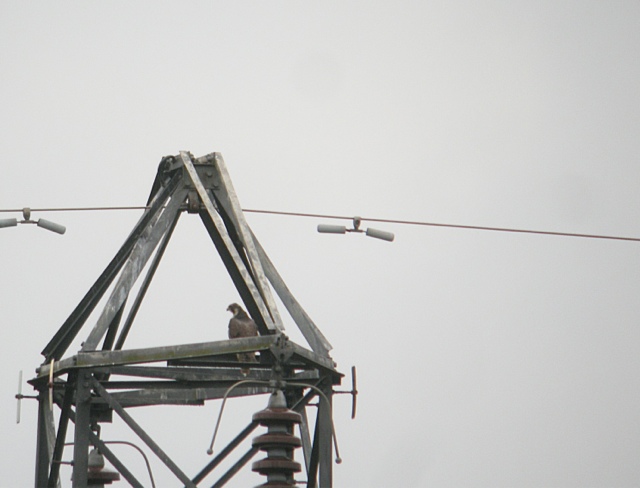
At Roxton, RIB and I enjoyed a fabulous flyby immature male (I think) Peregrine, which obligingly sat up on a pylon for R to obtain some video. Near Great Barford, six Egyptian Geese and 68 Mute Swans held our attention for a while.
A photograph of the Peregrine will follow...
That puts me on 99. What will be the landmark bird?
DOM

At Roxton, RIB and I enjoyed a fabulous flyby immature male (I think) Peregrine, which obligingly sat up on a pylon for R to obtain some video. Near Great Barford, six Egyptian Geese and 68 Mute Swans held our attention for a while.
A photograph of the Peregrine will follow...
That puts me on 99. What will be the landmark bird?
DOM
Saturday, 5 January 2013
Not a bad start...
At the end of day four, my total stands at 71, which is approximately 71 more than at this stage last year. Just working the local area - the Potton/ Sandy/ Biggleswade triangle - has allowed me to 'find' the majority of the commoner species. Highlights so far include four Ravens over West Sunderland Farm; a Brambling at an allotment near Potton and a shamelessly-tresspassed but tactically-astute found Woodcock.
I really like the challenges within challenges this year: waders, wildfowl, passerines...I may even have a shout on the latter. I'll just need to remain focussed and find a spring Wood Warbler, passage Black Redstart or better.
Good luck to all, and oh, Mr Grimsey - no six month head-start this year!
Right, off out now to do my BTO Winter Thrush Survey. Hope that my devotion to the conservation cause pays some personal dividends. ;-)
DOM
I really like the challenges within challenges this year: waders, wildfowl, passerines...I may even have a shout on the latter. I'll just need to remain focussed and find a spring Wood Warbler, passage Black Redstart or better.
Good luck to all, and oh, Mr Grimsey - no six month head-start this year!
Right, off out now to do my BTO Winter Thrush Survey. Hope that my devotion to the conservation cause pays some personal dividends. ;-)
DOM
Wednesday, 7 November 2012
A six thrush day
Monday 5th November, Tithe Farm/ Deepdale Tree Nursery, Hatley Road, Potton: a rapid-fire 'tack'-ing at the foot of a hedge and a fine, male Ring Ouzel - in characteristic fashion - nervously and erratically flies out and over some rough ground to the sanctuary of the far hedgerow. As with many SFY-ticks, quite unexpected, but very welcome. A fine bird and certainly within my top five to find and see locally.
Following last week's Rock Pipit, which the 'two wise men' have told me I can have, this takes my total to 127. I refuse to tick the Pink-foot I saw with RIB though - there is no way I could have scored that with bins alone.
Not much to go for now - a total of 130 would be 'respectable' without transport (notwithstanding Blain's Cabs and Bashford's Taxis). My mind is now already wandering to 2013. I missed a lot of the start of this year, so target 2013 is 140 and to kidnap SCB during April and May.
DOM
Following last week's Rock Pipit, which the 'two wise men' have told me I can have, this takes my total to 127. I refuse to tick the Pink-foot I saw with RIB though - there is no way I could have scored that with bins alone.
Not much to go for now - a total of 130 would be 'respectable' without transport (notwithstanding Blain's Cabs and Bashford's Taxis). My mind is now already wandering to 2013. I missed a lot of the start of this year, so target 2013 is 140 and to kidnap SCB during April and May.
DOM
Sunday, 26 August 2012
Target secured
This weekend, I undertook a monumental tour of outlying villages around Potton, taking in farmland around Everton, Tempsford, Sutton, Eyeworth, Cockayne Hatley and this morning, Wrestlingworth finally struck gold. Not just one Whinchat either, but three in the same field. Persistence finally paid off, although I estimate it took about 20 miles of walking, several litres of water and a potassium overdose through too many bananas to get there. But it was worth every minute, with many other (non-counting) highlights along the way.
That takes me to 116 - 97 of which were on foot within a three mile radius of Potton.
That takes me to 116 - 97 of which were on foot within a three mile radius of Potton.
Tuesday, 21 August 2012
Tree Pipit
I thought joining this challenge would be fun and motivational, but boy are half-decent, self-found birds hard to come by when you have no transport. This much I have already discovered. Then add to this the lack of any significant waterbodies.
To date, the 'only' birds I have 'found' are a co-found Purple Heron with Steve (and I wouldn't have been there to bask in reflected glory if he hadn't offered to take me out birding for the day), a Lesser Spot, Whimbrel, Cetti's at a new site only a stone's throw from my mother's house (where I happened to be staying) and erm....some Mandarin on the local brook.
So having only been involved for a few days, I decided upon a suitable, un(der)-watched local site for Whinchat and went along to a disused quarry north of Potton. The quarry floor is crammed with ragwort: suitable look-out points, I thought.
I had scanned for about half an hour I guess, when behind me, I heard an explosive, high-frequency and drawn-out call. Instinctively, and despite being alone, I intoned ''Tree Pipit!'' I could now see the bird, bouncing nervously from its perch. It called again, seemingly looking for somewhere to settle, before with one last call, it rose and was gone.
Not what I had expected, but when is birding ever thus?
Darren
Subscribe to:
Posts (Atom)